

Table of Contents
- The First Ten Minutes After a Car Accident
- The First 24–48 Hours After a Car Accident
- Why Timing Matters in Florida Vehicle Crash Claims
- Avoidable Missteps That Quietly Undermine Personal Injury Claims
- Getting Medical Care in St. Petersburg After a Car Accident
- How to Handle Property Damage, Repairs, and Diminished Value
- Reimbursement After a Car Accident
- Insurance Conversations You’ll Likely Encounter
- Special Situations in Pinellas County
- Evidence Without the Clutter: What to Save and Why
- Fault, Florida Law, and the Leverage that Comes From Preparation
- How a Car Accident Lawyer Can Help
- Local Realities in St. Petersburg
- Top Questions After a Car Accident
- Why St. Petersburg Clients Choose McKyton Law
When a collision happens on I-275, along Gandy, or on a residential street in St. Petersburg, you face two urgent jobs at once: safeguard your health and protect the strength of your case. The minutes after impact feel chaotic, but clear action in the same hour, the same day, and the same week makes a measurable difference. This guide walks you through what to do and what to avoid, why timing matters under Florida’s insurance rules, and where an attorney can change outcomes in negotiation or litigation.
The First Ten Minutes After a Car Accident: Stabilize, Record, and Choose Words Carefully
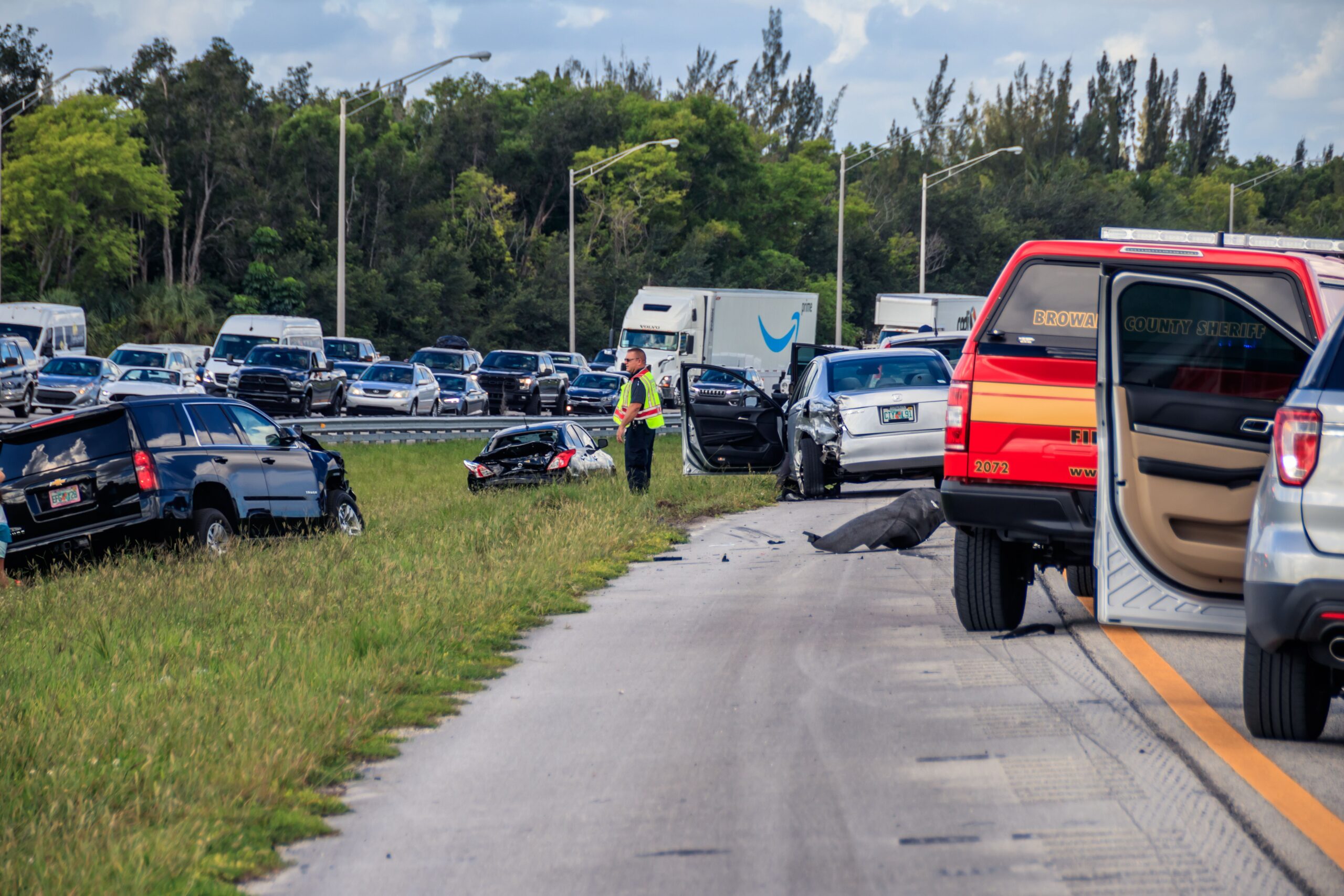
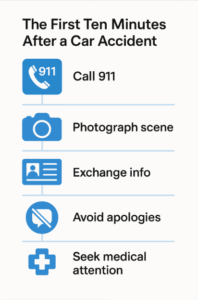
Start with safety immediately after a vehicle accident. If you can move without risking further harm, step out of traffic and away from secondary hazards. Call 911 so police and EMS can document the scene. A crash report anchors time, locations, vehicles, and conditions while memories are fresh. Tell first responders exactly how you feel, even if symptoms are subtle. Adrenaline hides pain, and early notes about dizziness, headache, ringing in your ears, or neck stiffness often matter later.
- Step out of danger and call 911 immediately.
- Get medical evaluation on scene, even if symptoms seem minor.
- Exchange and verify information: licenses, plates, and insurance.
- Photograph and video the environment, vehicles, and surroundings.
- Avoid admitting fault or minimizing injuries.
The First 24-48 Hours After a Car Accident: Build the Record While You Care for Yourself
When you’re the victim of a car accident, seek a medical evaluation the same day whenever possible. Emergency departments, urgent care clinics, or your primary care practice can triage, order imaging when appropriate, and document complaints that may worsen overnight. Florida’s insurance framework places weight on prompt care in a car accident claim. Delays give insurers an opening to argue your injuries are unrelated or minimal. If you’re referred to specialists, orthopedics, neurology, or physiatry, book those visits and keep copies of every summary.
- Get a medical evaluation within 24 hours.
- Start a daily recovery journal noting pain, sleep, and mobility.
- Notify your insurer but decline recorded statements until legal advice.
- Document vehicle condition changes and repair locations.
- Preserve dash-cam, smartwatch, or app data related to the incident.
Why Timing Matters in Florida Vehicle Crash Claims
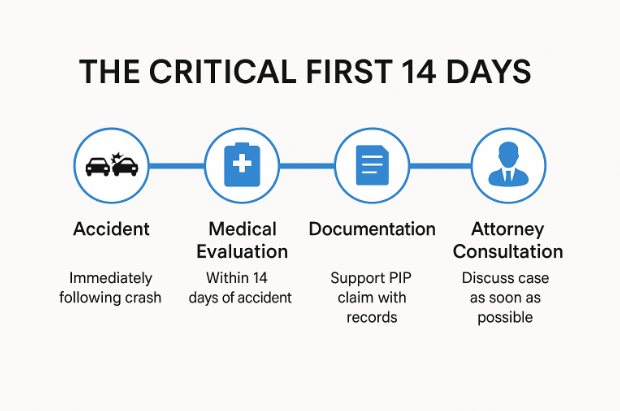
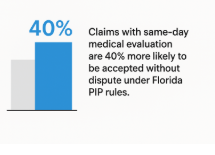 Florida’s rules and insurer practices place real weight on what you do in the first two weeks. Prompt medical evaluation ties injuries to the crash, organizes your care plan, and preserves benefits that can affect coverage and reimbursement. Even if you think you can power through with ice and over-the-counter medication, a same-day evaluation followed by specialist referrals often protects you from second-guessing later. If you encounter waitlists or appointment delays, keep those notices; they’ll help explain any gaps in care that weren’t your choice.
 Avoidable Missteps That Quietly Undermine Personal Injury Claims
Be very careful on social in the weeks following a car crash. Social media posts can lead to misunderstandings in your recovery status. A smiling photo at a family event or a casual note that you’re “okay” can be used to downplay pain or minimize limitations. Avoid signing broad medical releases, which carry similar risks. Insurers do not need unfettered access to your entire medical history to process a specific crash claim, and blanket authorizations can invite fishing expeditions unrelated to your injuries.
Recorded statements deserve caution as well. Adjusters are trained to narrow claims with seemingly simple questions. Innocent, imprecise answers like “I guess I’m fine” or “I think I was going the speed limit” can be recast to minimize liability or damages. Let a car accident lawyer handle that conversation or prepare you for it. Finally, don’t skip appointments or stop treatment early because you “feel better enough.” Gaps in care turn into arguments that your injuries weren’t that serious or that you failed to mitigate damages by refusing care. If transportation, childcare, or scheduling become obstacles, tell your providers and document the difficulty.
Getting Medical Care in St. Petersburg After a Car Accident: Getting the Right Eyes on the Right Problem
Think of the first visit as triage and documentation, then build a care plan that supports real recovery. Emergency and urgent care teams handle immediate concerns and objective records. Primary care coordinates ongoing treatment and referrals. Specialists evaluate structural injuries (orthopedics), concussion and neurological symptoms (neurology), and the interplay of nerves, muscles, and function (physiatry). Physical therapists track mobility, strength, and pain over time, which creates measurable, objective milestones in your journey.
Concussion and whiplash symptoms often emerge after a few days or evolve. People commonly report brain fog, light sensitivity, headaches, neck pain, memory lapses, irritability, and sleep disruption days after the crash. Others note arm and leg numbness, radiating pain, or weakness tied to spinal involvement. Share these changes at follow-ups and bring your journal. Medications matter, too. Side effects like fatigue or dizziness affect your ability to work, drive, or care for a household. When restrictions appear in medical notes (i.e., no overhead lifting, limited standing, reduced screen time), they support wage and duty modifications with your employer.
How to Handle Property Damage, Repairs, and Diminished Value After an Accident
Many people prefer to run the property claim through their own collision coverage to get moving faster while their insurer pursues reimbursement from the at-fault carrier behind the scenes. Others wait for the at-fault carrier to authorize repairs to avoid a deductible. Each path carries trade-offs in speed, control, and appraisal leverage. Ask questions about parts quality. Original equipment manufacturer (OEM) parts may preserve safety systems and vehicle value better than certain aftermarket options. Keep every estimate, invoice, and communication with the shop and the adjuster.
Even well-repaired vehicles can suffer diminished value because they now carry an accident history. Your car accident lawyer should assess whether a diminished value claim fits and how to support it with market data. Parents should also pay attention to child safety seats. Most manufacturers recommend replacement after moderate or severe collisions. Save both the original purchase receipts and replacement receipts, as these often become reimbursable property damage items.
Reimbursement After a Car Accident for Work Wages, and the Real-Life Impact of Injury
Inform your employer early and in writing that you’ve been injured and provide only the medical details necessary to set restrictions. Providers can document lifting limits, reduced standing or driving tolerance, or screen-time limitations that impact office and remote roles. These notes support wage recovery by linking work limits to medical necessity rather than personal preference.
Proving lost wages is about paperwork, not persuasion. Keep recent pay stubs and tax forms. If you rely on shifts or tips, a simple calendar showing the hours you would have worked can be persuasive when paired with employer confirmation. Gig workers and the self-employed should gather invoices, bank statements, booking cancellations, and client emails to show before-and-after performance. The goal is a clean, objective picture of what the crash cost you in the short term and what continuing limits might cost in the future.
Insurance Conversations You’ll Likely Encounter After an Accident
Sooner than you expect, you may get a call from your auto insurance asking for a recorded statement “to move things along.” This a moment to pause. It’s reasonable to report the basics to your insurer and to provide claim-processing details, but it’s also reasonable to decline anything that will be recorded until you’ve spoken with an attorney. Early, low settlement offers are common precisely because you don’t yet know the full medical picture. Accepting before you understand diagnoses, likely recovery time, and future care needs can waive claims tied to later-discovered injuries.
You may also face an insurer-arranged medical evaluation. Despite the label, “independent” exams exist to challenge treatment and causation. A personal injury lawyer can help you prepare for these exams, attend when appropriate, and respond to slanted conclusions with medical provider records and specialized opinions. When a car accident case involves layered policies, as with rideshare or commercial vehicles, sequencing claims and evidence becomes strategy, not paperwork.
Special Situations in Pinellas County
Uninsured and underinsured motorist coverage can help you receive compensation for a strong recovery instead of a dead end when the at-fault driver lacks sufficient insurance. If you carry UM/UIM, treat your claim as you would litigation against an opposing party. Your own insurer’s incentives change once you make a UM claim, so measured communication and careful documentation matter. Rideshare and commercial crashes add layers of corporate policies and independent-contractor arrangements. Preserve app screenshots, delivery tickets, or bills of lading, and expect more complex negotiations with multiple carriers.
Hit-and-run crashes demand speed. Report immediately, and if you can do so safely. A timely preservation request can make the difference between a fuzzy narrative and clear video proof. Multi-vehicle-chain-reaction collisions, common on US-19 and the approaches to the Howard Frankland, benefit from wide-angle photos, measurements, and early expert review. Establishing how impacts propagated through a line of cars can shift the apportionment of fault materially.
Evidence Without the Clutter: What to Save and Why After an Accident
Think in categories rather than lists. Official records anchor your accident claim, so request the police report number and keep any related incident or CAD information, the Computer Aided Dispatch System used by most modern law enforcement agencies in Florida. Visuals tell the “how,” so back up your photos and videos in a secure folder and label them with dates and locations. Medical documentation shows injury, treatment, and change over time; hold onto visit summaries, imaging reports, prescriptions, and the notes that place restrictions in context. Financial proof translates life impact into numbers: repair estimates, rental invoices, receipts for out-of-pocket costs, and records that show missed income or lost opportunities. Finally, you day-to-day recovery story, captured in a few lines each evening, provides the connective tissue between clinical notes and lived experience.
Fault, Florida Law, and the Leverage that Comes From Preparation
After an accident, insurers work to increase your share of fault and discount your damages. Your best answer is a clean record: timely care, consistent treatment, precise documentation, and measured communication. Over time, case law and statutes evolve. What adjusters request, how providers document, and how courts handle certain disputes shift over time. Your car accident attorney positions the facts in your case within current rules and expectations, building negotiation leverage that reflects how your case would actually play out if it had to be tried.
How a Car Accident Lawyer Can Help
The value of legal counsel shows up long before a courtroom. A Personal Injury Attorney can be instrumental in forcing other parties to preserve evidence, such as video, and requiring critical data from vehicles and devices that explain forces and mechanics. They coordinate the medical narrative so that diagnoses, limitations, future care, and costs are explained in a coherent manner of how the collision changed your life. They control statements and negotiations across multiple insurers, especially when policies stack or conflict, and they file strategically when needed. Even when cases settle, settlement value usually mirrors how credible your trial posture appears to the other side.
When should you call? If you were injured, if fault is disputed, if the other driver lacks adequate insurance, if it’s a hit-and-run, or if you’re being pressed for a recorded statement or a quick check, it’s time to get a car accident lawyer involved.
Local Realities in St. Petersburg
Traffic volumes and tourism patterns affect crash dynamics here. Corridors like 34th Street, US-19, and the bridges connecting Pinellas and Tampa see frequent multi-vehicle events where seconds of signal timing or lane-change behavior matter. Out-of-state drivers and rentals complicate verification and policy language. Seasonal demand can strain appointment availability; if you encounter delays, keep those notices to explain any treatment gaps beyond your control. Small steps like these reduce avoidable disputes and reflect well on your diligence.
Top Questions After a Car Accident
Do I have to go to the ER if I feel okay?
You don’t have to, but a same-day evaluation is wise. Documentation connects the collision to your symptoms and protects benefits under Florida’s framework.
Should I talk to the other driver’s insurer?
Report the basics and decline recorded statements until you speak with an attorney. Precision matters, and you deserve time to understand your injuries.
Can I receive compensation if the other driver has no insurance?
Often yes, through uninsured/underinsured motorist coverage and other avenues. Have a lawyer review your policy and the facts early.
How long will this take?
Property repairs can move quickly. Injury claims should not be rushed. Settling before the medical picture is clear usually benefits the insurer, not you.
Why St. Petersburg Clients Choose McKyton Law After a Car Accident
Clients choose us for steady communication and trial-ready preparation. We represent individuals and families across St. Petersburg and Pinellas County in personal injury and wrongful death matters from car, motorcycle, pedestrian, and commercial vehicle crashes. Our approach is straightforward: preserve the right evidence early, coordinate care intelligently, communicate clearly, and negotiate from a position of strength built on real facts. When needed, we litigate with the same clarity and preparation that drive our negotiations.
If you’ve been in a Florida car accident and you’re deciding what to do next, start by organizing your records and getting the medical attention you need. Then give us a call. As one of St. Petersburg’s top personal injury attorneys, Richard McKyton will meet you where you are and help you move from uncertainty to a plan.
About McKyton Law Firm
McKyton Law Firm represents individuals and families across St. Petersburg and Pinellas County in personal injury and wrongful death matters, including car, motorcycle, pedestrian, and commercial vehicle crashes. The firm combines thorough investigation, clear communication, and trial-ready preparation to pursue full and fair compensation for clients’ medical care, lost wages, and long-term needs. Consultations are free, and there are no fees unless we recover for you.
For more information on What to do after a Car Accident in Florida: Visit our Youtube Channel.
Download your free Personal Injury Checklist Here: Mckyton Law Personal Injury Checklist